-
Hot and dry conditions seem to be continuing across the Prairies this summer, it is important to understand how corn uses water throughout the season.
-
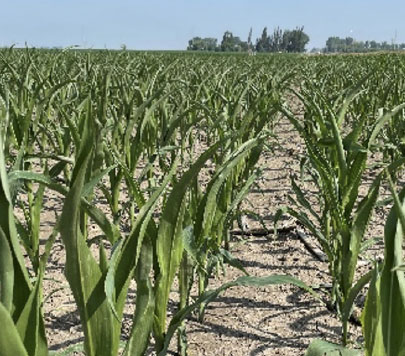
As seen during visits in June 2021.
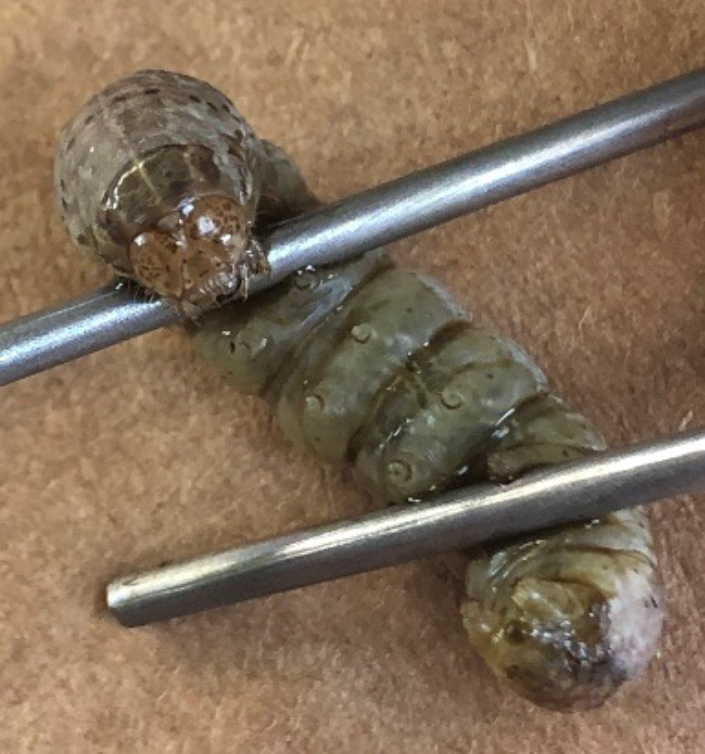
This insect was reported in eastern Quebec last year and was detected in several new areas this spring, including Nicolet. The adult moth was able to lay its eggs last fall, and the mild winter may have contributed to the survival of the eggs. Young larvae attack the foliage of several plants...
-
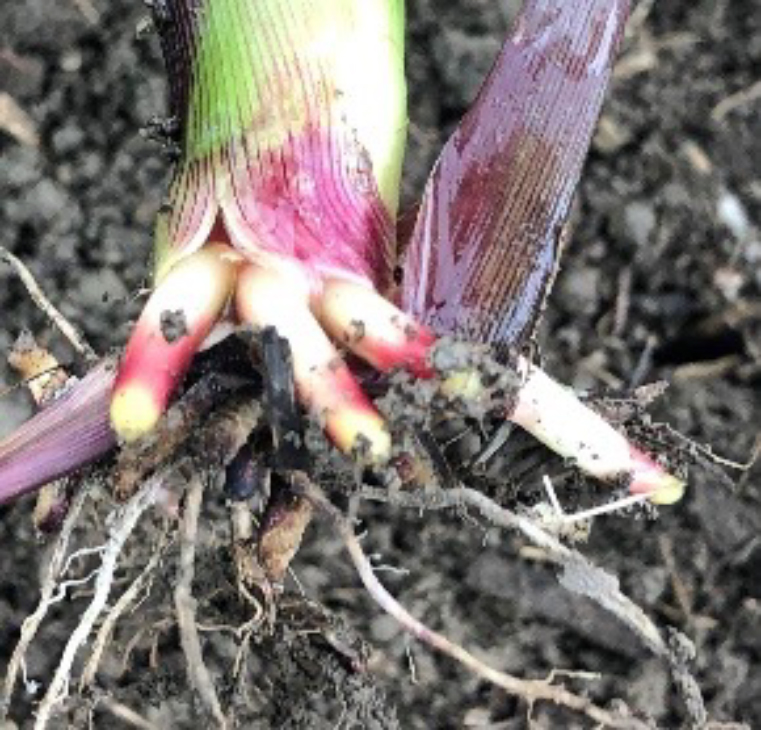
This syndrome occurs in young corn plants and is attributed to limited or simply absent development of the nodal roots.
Various factors are involved:
1. Shallow planting
Seed MUST be sown to a MINIMUM depth of 1.5 inches to ensure that nodal roots grow 3 4 inch below the soil surface. Excessive or absent moisture will cause the death...
-
Ce syndrome se produit chez les jeunes plants de maïs et est attribué à un développement limité ou tout simplement absent des racines nodales.
-
On a rapporté la présence de cet insecte dans l’Est de la province l’année dernière, et il a été détecté dans plusieurs nouvelles régions ce printemps, notamment à Nicolet. Le papillon a pu pondre ses oeufs l’automne dernier, et l’hiver doux a pu...
-
Staging corn plants correctly is essential for understanding and assessing crop development. Your staging method will also affect when you make herbicide, fungicide, and fertility applications and recommendations. It is also important to know the difference between the methods as different companies use different methods to make...
-
Corn growth stages are divided into two – vegetative growth and reproductive growth. Vegetative growth begins with emergence and ends with tassel emergence. Reproductive growth begins quickly after tassel emergence and ends with physiological maturity. This newsletter will focus on the six stages of reproductive growth grain fill (R1...
-
By now many have heard the crop losses associated with the corn disease Tar Spot. The complex disease is made up of two fungal pathogens: Phyllachora maydis and Monographella maydis.
-
The purpose of this project was to demonstrate varietal response to population and genetic response to fungicide application and to determine if ROI increases when populations are increased and a fungicide is applied.
-
Bt resistant CRW has resulted in measurable yield loss and has triggered an urgent call for farmers to implement management strategies regarding the utilization of Bt proteins.